
Understanding Vaginal Discharge: Causes, Types, Symptoms, and When to See a Gynaecologist
Understanding Vaginal Discharge: Causes, Types, Symptoms, and When to See a Gynaecologist
Vaginal discharge is a normal part of every woman’s reproductive health. It helps keep the vagina clean by flushing out dead cells and maintaining the natural balance of healthy bacteria. The colour, consistency, and amount of vaginal discharge naturally change during different phases of the menstrual cycle due to hormonal fluctuations.
While most vaginal discharge is completely normal, certain changes in colour, smell, or texture can indicate an infection or an underlying gynaecological condition. Understanding the difference between normal vaginal discharge and abnormal vaginal discharge can help you seek timely medical care.
If you are experiencing unusual vaginal discharge, recurrent infections, or abnormal bleeding, consulting an experienced gynaecologist in Delhi like Dr. Sarika Gupta can help identify the exact cause and ensure appropriate treatment.
What is normal vaginal discharge?
Healthy vaginal discharge varies from woman to woman. It changes throughout the menstrual cycle and usually does not require treatment.
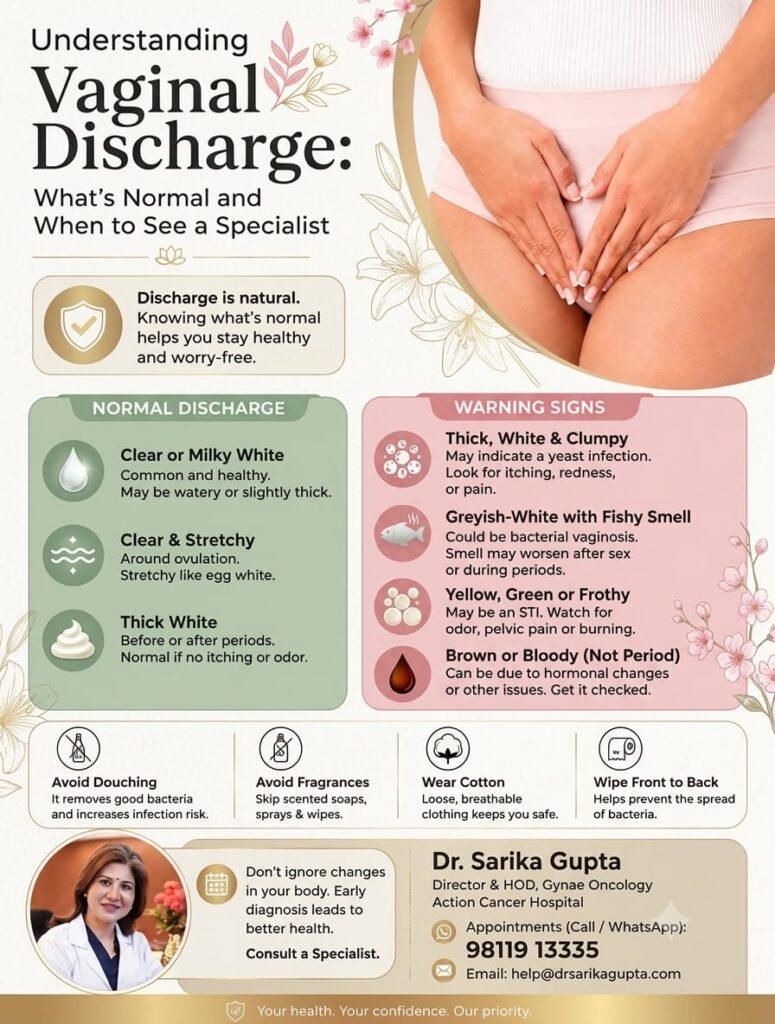
Clear or milky white discharge
This is the most common type of normal vaginal discharge. It may be watery on some days and slightly thicker on others. This is a healthy sign that your vagina is maintaining its natural environment.
Clear, slippery, and stretchy discharge
During ovulation, vaginal discharge often becomes transparent, slippery, and stretches like egg white. This fertile cervical mucus is completely normal and indicates that ovulation is taking place.
Thick white discharge before or after periods
Many women notice thicker white discharge just before or immediately after their menstrual period. If there is no itching, burning, pain, or foul smell, it is generally considered normal.
Healthy vaginal discharge should:
- Be clear, white, or slightly milky
- Have little or no smell
- Not cause itching, burning, redness, or irritation
- Vary naturally during the menstrual cycle
Abnormal vaginal discharge: Signs you should not ignore
A sudden change in vaginal discharge can sometimes be the first sign of an infection or another gynaecological condition. Paying attention to these symptoms can help prevent complications.
Thick, white, clumpy discharge
This type of discharge often resembles cottage cheese and is commonly caused by a vaginal yeast infection (Candida infection).
Common symptoms include:
- Severe itching
- Burning sensation
- Redness and swelling
- Pain during urination
- Pain during sexual intercourse
Grey or greyish-white discharge with a fishy smell
This pattern is commonly associated with Bacterial Vaginosis (BV), which develops when the normal balance of vaginal bacteria changes.
Symptoms may include:
- Strong fishy odour
- Thin grey discharge
- Smell becoming stronger after intercourse or during menstruation
Yellow, green, or frothy vaginal discharge
Yellow, green, or frothy discharge may indicate a sexually transmitted infection (STI) such as:
- Trichomoniasis
- Chlamydia
- Gonorrhoea
These infections may also cause:
- Burning while passing urine
- Pelvic pain
- Pain during intercourse
- Unpleasant vaginal odour
Prompt medical evaluation is recommended.
Brown, pink, or bloody discharge between periods
Occasional spotting can occur due to hormonal changes, ovulation, or certain medications. However, persistent brown, pink, watery, or bloody discharge should never be ignored.
Seek medical evaluation if you notice:
- Bleeding after menopause
- Bleeding after sexual intercourse
- Persistent spotting between periods
- Watery blood-stained discharge
- Unexplained abnormal uterine bleeding
These symptoms may be associated with cervical conditions, uterine disorders, endometrial abnormalities, or, in some cases, gynaecological cancers. Early diagnosis is important.
Tips to maintain good vaginal health
Simple daily habits can significantly reduce the risk of vaginal infections.
Avoid douching
The vagina naturally cleans itself. Douching removes protective bacteria and increases the risk of infections.
Avoid scented intimate hygiene products
Perfumed soaps, vaginal washes, sprays, and scented wipes may irritate the delicate vaginal tissue. Warm water is usually sufficient for external cleaning.
Wear breathable cotton underwear
Cotton underwear allows better airflow and helps reduce excess moisture, lowering the risk of fungal infections.
Maintain proper hygiene
Always wipe from front to back after using the toilet to prevent bacteria from spreading from the anal area to the vagina.
Avoid prolonged moisture
Change out of sweaty gym clothes or wet swimwear as soon as possible to reduce the risk of yeast infections.
When should you consult a gynaecologist?
Book an appointment with a gynaecologist if you experience:
- Persistent vaginal discharge
- Foul-smelling vaginal discharge
- Yellow, green, grey, or bloody discharge
- Vaginal itching or burning
- Pelvic pain
- Fever with vaginal discharge
- Pain during urination
- Pain during sexual intercourse
- Bleeding after menopause
- Irregular vaginal bleeding
Many vaginal infections produce similar symptoms, but the treatment varies depending on the underlying cause. A proper examination and diagnosis ensure you receive the right treatment without unnecessary medication.
Consult Dr. Sarika Gupta | Best Gynaecologist & Gynae Oncologist in Delhi
If you are experiencing abnormal vaginal discharge, recurrent vaginal infections, irregular bleeding, or any other gynaecological concern, consult Dr. Sarika Gupta, Director & HOD, Gynae Oncology, Action Cancer Hospital, Delhi.
With extensive experience in women’s health, cervical disorders, HPV-related diseases, precancerous conditions, and gynaecological cancers, Dr. Sarika Gupta provides accurate diagnosis and evidence-based treatment tailored to each patient.