
Understanding Ovarian Cysts
Understanding Ovarian Cysts: A Doctor's Perspective
It is very common for patients to feel a sense of alarm when they hear the word "cyst," especially when it relates to the ovaries. If you have recently been told you have an ovarian cyst, or if you are simply researching the topic, I want to start by reassuring you: most ovarian cysts are benign, non-cancerous, common, and often resolve on their own.
As a physician, I believe the best way to reduce anxiety is through understanding. Here is a breakdown of what an ovarian cyst actually is and what it means for your health.
What Exactly Is an Ovarian Cyst?
Think of your ovaries as two almond-sized organs that serve a vital role in your reproductive system. They house your eggs and produce hormones like estrogen and progesterone.
An ovarian cyst is essentially a fluid-filled sac or pocket that forms on or within one of the ovaries. You can visualize it like a small blister; it is a contained space filled with fluid, tissue, or other material.
Why Do They Form?
The vast majority of ovarian cysts are what we call functional cysts. These are a normal, temporary result of your menstrual cycle.
- Follicular Cysts: During a normal cycle, the ovary grows a follicle, which is a tiny sac that holds an egg. Usually, this follicle releases the egg during ovulation. If it doesn't release the egg, or if it continues to grow after the egg is released, it can become a follicular cyst.
- Corpus Luteum Cysts: After a follicle releases its egg, it typically shrinks. However, if the opening seals up and fluid accumulates inside, it can form a corpus luteum cyst.
Because these are tied to your hormonal cycle, they are incredibly common in women of childbearing age.
Do I Need to Worry? Symptoms
Most of the time, cysts are "silent"—you don't even know they are there. They are often discovered incidentally during a routine pelvic exam or an ultrasound performed for another reason.
However, if a cyst becomes large or puts pressure on surrounding structures, you might notice:
- Pelvic pain: A dull or sharp ache in the lower abdomen on the side of the cyst.
- Feeling of fullness/heaviness: A sensation of pressure or bloating in the belly.
- Irregular periods: Changes in your typical menstrual flow.
- Pain during intercourse.
When to seek immediate care: If you experience sudden, severe abdominal or pelvic pain, accompanied by fever, vomiting, or signs of fainting, please seek emergency medical attention. These can be signs of a cyst rupture or ovarian torsion, where the ovary twists, both of which require prompt medical intervention.
How Do We Manage Them?
My approach to treating an ovarian cyst depends on several factors: your age, the size and appearance of the cyst on an ultrasound, and whether you are experiencing symptoms.
- Watchful Waiting: For many women, especially those who are pre-menopausal, we simply recommend "watchful waiting." We schedule a follow-up ultrasound in a few months to see if the cyst has shrunk or disappeared on its own.
- Medication: If the cysts are recurrent, hormonal contraceptives, like birth control pills, can sometimes be used to prevent ovulation and stop new functional cysts from forming.
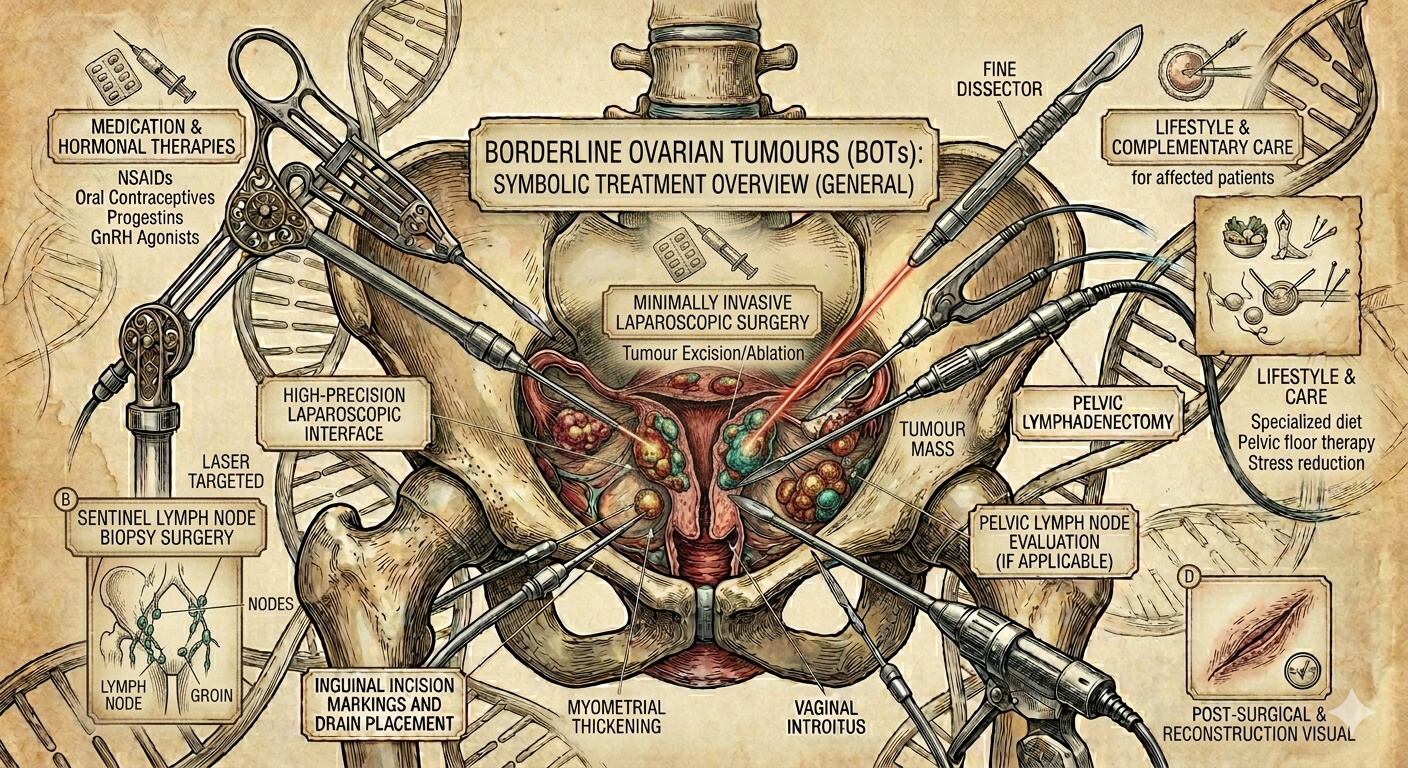
- Surgery: We generally only consider surgery if a cyst is very large, appears suspicious on imaging, or is causing significant, persistent pain. In modern practice, this is frequently done via minimally invasive, laparoscopic surgery.
Please remember that finding an ovarian cyst is rarely a cause for panic. Your body is dynamic, and these structures are often just a reflection of your reproductive system doing its job.
If you have concerns, don't hesitate to reach out to your gynecologist. We can perform a pelvic exam and use pelvic ultrasound imaging to get a clear picture of what is happening. Knowledge is your most powerful tool in maintaining your gynecological health.
Disclaimer: This content is for informational purposes only and does not constitute medical advice, diagnosis, or treatment. Always seek the advice of your physician or other qualified health provider with any questions you may have regarding a medical condition.