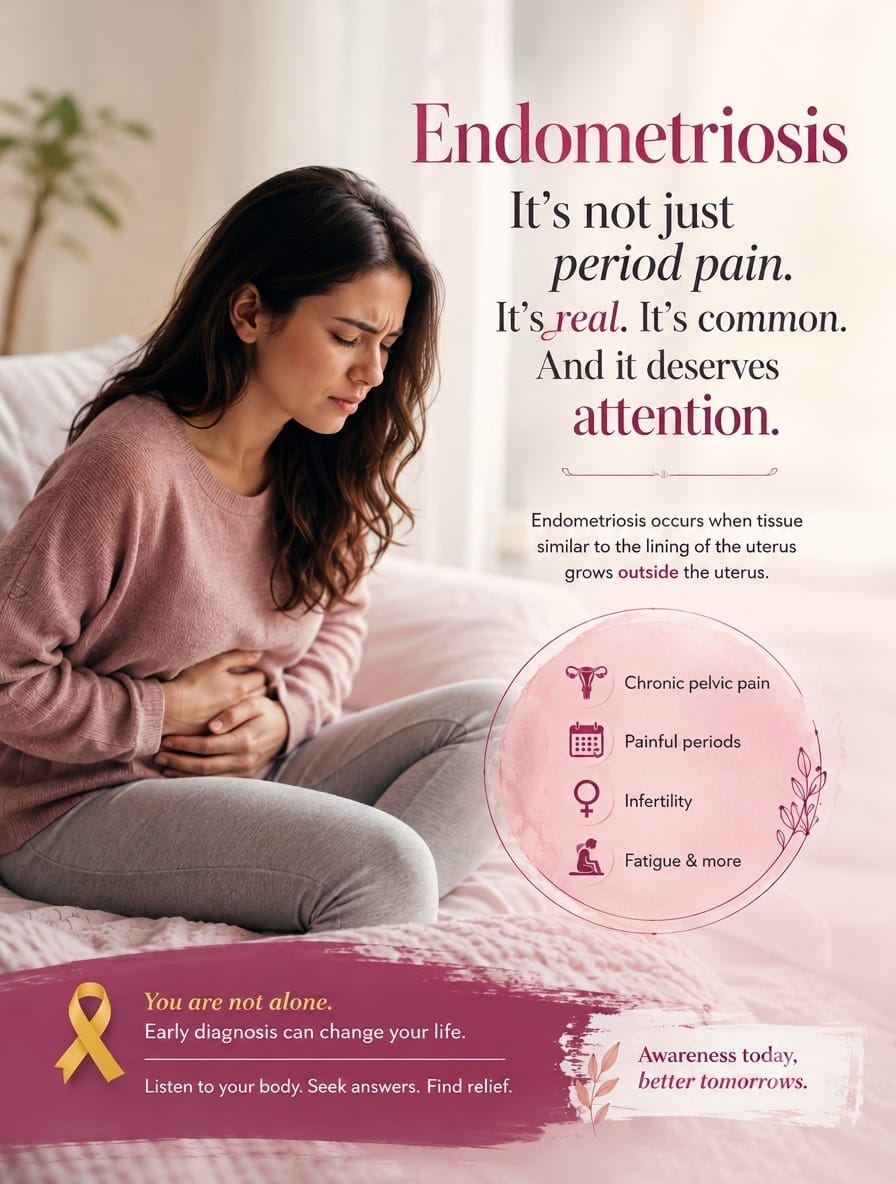
Endometriosis is a common gynecological condition, but many women do not realize they have it for years. Painful periods are often dismissed as “normal,” which can delay diagnosis and treatment. While mild menstrual discomfort is common, severe pain that affects your daily life should never be ignored.
With early diagnosis and the right treatment, most women can manage their symptoms, protect their fertility, and maintain a good quality of life.
At Dr. Sarika Gupta’s every patient receives a thorough evaluation and a treatment plan based on her symptoms, age, fertility goals, and overall health. Treatment may include medicines, lifestyle advice, laparoscopic surgery, or robotic surgery when needed.
What is endometriosis?
Endometriosis develops when tissue similar to the lining of the uterus grows outside the uterus. These deposits are most commonly found on the:
- Ovaries
- Fallopian tubes
- Pelvic lining
- Bladder
- Bowel
- Ligaments supporting the uterus
In rare cases, endometriosis can affect other organs.
Like the lining inside the uterus, this tissue responds to monthly hormonal changes. However, because it has no way to leave the body during menstruation, it can cause inflammation, internal bleeding, scar tissue, and adhesions. Over time, these changes may lead to chronic pelvic pain and fertility problems.
Symptoms of endometriosis
Symptoms vary widely. Some women have severe pain even with small areas of disease, while others have extensive endometriosis with very few symptoms.
Common symptoms include:
- Severe menstrual cramps
- Ongoing pelvic pain
- Heavy menstrual bleeding
- Pain during sexual intercourse
- Pain while passing urine during periods
- Pain during bowel movements
- Lower back pain
- Difficulty conceiving
- Fatigue
- Bloating
- Nausea during menstruation
If your periods regularly force you to miss work, college, or everyday activities, it is worth getting evaluated by a gynecologist.
What causes endometriosis?
Doctors still do not know the exact cause of endometriosis. Several factors are thought to play a role, including:
- Retrograde menstruation
- Family history
- Hormonal factors
- Changes in the immune system
- Previous pelvic surgery
- Transformation of abdominal cells into tissue similar to the uterine lining
Women with a close family member who has endometriosis are more likely to develop the condition.
Who is at higher risk?
Your risk may be higher if you:
- Started menstruating at a young age
- Have short menstrual cycles
- Have heavy or prolonged periods
- Have never been pregnant
- Have a family history of endometriosis
- Have certain uterine abnormalities
Can endometriosis affect fertility?
Yes. Endometriosis is one of the leading causes of female infertility.
It may affect fertility by:
- Blocking the fallopian tubes
- Damaging ovarian tissue
- Reducing egg quality
- Causing pelvic adhesions
- Changing the pelvic environment needed for fertilization
Many women with endometriosis still conceive naturally. Others may benefit from fertility treatment. Early diagnosis often gives more treatment options and may improve pregnancy outcomes.
Types of endometriosis
Superficial peritoneal endometriosis
Small patches of endometriosis are present on the lining of the pelvis.
Ovarian endometrioma
These are ovarian cysts filled with old blood and are often called “chocolate cysts.”
Deep infiltrating endometriosis
This is a more extensive form of the disease that can involve the bowel, bladder, or tissues deep within the pelvis.
How is endometriosis diagnosed?
Diagnosis starts with a detailed discussion about your symptoms, menstrual history, and a pelvic examination.
Your doctor may recommend:
Ultrasound
Ultrasound can identify ovarian endometriomas and may detect advanced disease.
MRI
MRI helps assess deep endometriosis and is especially useful when surgery is being planned.
Laparoscopy
Laparoscopy is the most accurate way to diagnose endometriosis. A tiny camera is inserted through small incisions in the abdomen, allowing the surgeon to see the affected areas directly. During the same procedure, endometriosis may also be removed if appropriate.
Treatment for endometriosis
Treatment depends on several factors, including:
- Your age
- Severity of symptoms
- Extent of disease
- Fertility plans
- Overall health
Medicines for pain
Pain relief medicines can reduce discomfort in women with mild symptoms.
Hormonal treatment
Hormonal medicines help slow the growth of endometriosis by reducing hormonal stimulation.
These may include:
- Combined oral contraceptive pills
- Progesterone therapy
- Hormonal intrauterine devices (IUDs)
- GnRH analogues for selected patients
Laparoscopic surgery
Laparoscopic surgery may be recommended for women with severe pain, ovarian cysts, or infertility.
Benefits include:
- Smaller incisions
- Less pain after surgery
- Faster recovery
- Smaller scars
- Removal of endometriosis
- Better fertility outcomes in selected patients
Robotic surgery
For complex cases, robotic surgery allows greater precision during surgery and may help preserve healthy organs while removing endometriosis.
Lifestyle changes that may help
Lifestyle changes cannot cure endometriosis, but they can help some women manage their symptoms.
Helpful habits include:
- Regular exercise
- A balanced anti inflammatory diet
- Adequate sleep
- Stress management
- Maintaining a healthy weight
- Avoiding smoking
Can endometriosis come back?
Yes. Endometriosis can return even after successful treatment.
The risk of recurrence depends on factors such as age, the extent of disease, and whether the ovaries continue producing hormones. Regular follow up helps detect recurring symptoms early so treatment can begin promptly.
When should you see a gynecologist?
Book an appointment if you have:
- Very painful periods
- Pelvic pain that continues after your period ends
- Difficulty becoming pregnant
- Pain during sexual intercourse
- Heavy menstrual bleeding
- Persistent ovarian cysts
- Pain while passing urine or stool during menstruation
Many women live with symptoms for years before seeking medical advice. Getting evaluated early can make treatment easier and may reduce long term complications.
Why choose Dr. Sarika Gupta?
Dr. Sarika Gupta is Director and HOD, Gynae Oncology, at Action Cancer Hospital, Delhi. She has extensive experience in advanced laparoscopic and robotic gynecological surgery and treats women with both benign gynecological conditions and gynecological cancers.
Every patient receives an individualized treatment plan. Depending on the condition, treatment may include medicines, minimally invasive surgery, fertility preserving approaches when appropriate, and regular follow up.
Frequently asked questions
Is endometriosis curable?
There is no permanent cure, but symptoms can usually be controlled with medicines, surgery, and regular follow up.
Can endometriosis cause infertility?
Yes. It is a common cause of female infertility, although many women conceive naturally or with fertility treatment.
Is surgery always required?
No. Many women improve with medicines alone. Surgery is usually considered when pain is severe, ovarian endometriomas are present, fertility is affected, or the disease is extensive.
Is laparoscopy safe?
Laparoscopic surgery is a well established minimally invasive procedure that usually results in less pain, smaller scars, and a quicker recovery than open surgery.
Does pregnancy cure endometriosis?
No. Some women notice temporary relief during pregnancy because of hormonal changes, but pregnancy is not a treatment or a cure.
Book an appointment
If you have painful periods, ongoing pelvic pain, or difficulty conceiving, do not ignore the symptoms. An early evaluation can help identify the cause and guide the right treatment.
Dr. Sarika Gupta
Director & HOD, Gynae Oncology
Action Cancer Hospital, Delhi